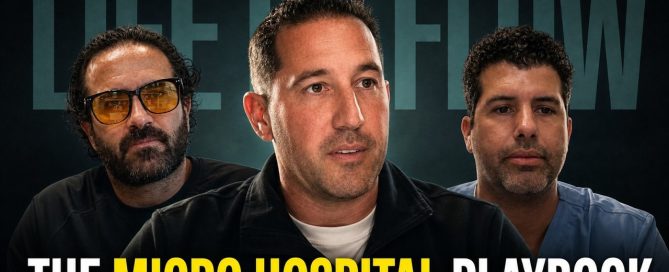
The Financial Mistakes Destroying Medical Practices | LOF #123

In this episode of Life of Flow, we sit down with Preston Alexander, co-founder of Forward Slash Health, for a practical conversation about the business side of private practice. Preston shares how he went from medical device product management to healthcare startups, consulting, revenue cycle work, and building a financial management platform for independent practices. We talk through the financial blind spots many physicians face when they leave employed medicine, including revenue cycle, cash flow, accounts receivable, accounts payable, outsourcing, staffing, and why understanding the numbers matters if you want to build a sustainable practice. 07:30 Preston’s path from MBA to medical devices and healthcare business 09:01 Using LinkedIn to learn how healthcare really works 11:02 How Forward Slash Health started from private practice pain points 18:27 Why Miguel keeps his revenue cycle team close to the practice 24:04 Cash flow, seasonality, and why big checks can be misleading 35:00 Where private practices commonly leak money 42:40 Why “doctors are bad at business” misses the point 54:30 What to know before outsourcing revenue cycle management 57:35 How to connect with Preston and Forward Slash Health Who Should Listen This episode is for physicians, surgeons, private practice owners, and doctors thinking about leaving the hospital system to build something independent. It’s also useful for anyone in healthcare operations who wants a clearer understanding of how revenue cycle, staffing, vendor relationships, and cash flow affect a practice. About Preston Alexander Preston Alexander is the CEO and co-founder of Forward Slash Health and Chief Operating Officer at Underscore Law. His background spans healthcare business, medical device product management, digital health, revenue cycle work, and private practice financial management. In the episode, he shares how his path from earning an MBA to working inside healthcare companies, launching and selling a medical device company, and helping build independent practices led him to focus on the financial systems physicians need to understand when running a practice. Connect with Preston 💼 LinkedIn: Preston Alexander 🗞️ Substack: The Healthcare Breakdown About Locumstory Locumstory is a free, unbiased educational resource about locum tenens to answer your questions about the how-tos of locums on their website, podcast, webinars, videos, and a locums 101 crash course. Visit locumstory.com to find out if locum tenens makes sense for you and your career goals. Follow Life of Flow 📲 Instagram: @LifeofFlowPodcast 👍 Facebook: Life of Flow Podcast 💼 LinkedIn: Life of Flow Podcast 🐦 X: @VascularPodcast If this conversation made you think differently about the business side of medicine, share it with a colleague who’s building, running, or considering an independent practice. And if you’re enjoying Life of Flow, a quick review helps more physicians and healthcare leaders find conversations like this.

2026-06-10T19:16:02+00:00June 10, 2026|Videos|

The Skills That Will Matter In The Age Of AI: The Shift Most People Don’t Understand | LOF #122

Andrew Sponsler, founder of Axiom, joins us this week to talk about agentic AI, personal operating systems, and why physicians should start experimenting before the tools become fully packaged for everyone else. Andrew builds AI operating systems for businesses, and in this episode, he breaks down what agentic AI means, how founders are using it now, and where it could start removing real operational pain from medical practices, from case logging to revenue cycle management. 03:04 What agentic AI is and why it matters 04:10 Andrew’s four-layer framework for understanding AI tools 07:00 How agentic AI acts beyond a single prompt 08:41 Why most people still have not engaged with AI 10:37 Should people start building now or wait for easier tools? 14:32 Why surgeons are wired to spot problems worth solving 17:44 Lucas’ case logging and billing workflow idea 22:39 Where beginners can start with Claude Code 30:29 Hardware, security, model routing, and basic setup 34:34 How Andrew helps businesses map and automate workflows 43:35 Why revenue cycle management may be the highest ROI use case Who Should Listen This episode is for physicians, surgeons, founders, operators, and medical practice owners who are curious about using AI to reduce operational friction without losing control of the work. It will especially resonate with anyone thinking about case logs, billing workflows, dashboards, communication overload, or the practical first steps of building with AI. About Andrew Sponsler Andrew Sponsler is the founder of Axiom, where he builds AI operating systems for businesses. His background is in continuous improvement and process mapping, and in the episode, he describes working with small and midsize businesses to create AI native workflows, streamline operations, and automate processes that create bottlenecks for founders and teams. He also runs Builder Weekend in Austin, a hands-on event for people building with AI at different stages. Connect with Andrew 📲 Instagram: @andrewsponsler 💼 LinkedIn: @andrewsponsler Follow Life of Flow 📲 Instagram: @LifeofFlowPodcast 👍 Facebook: Life of Flow Podcast 💼 LinkedIn: Life of Flow Podcast 🐦 X: @VascularPodcast If this conversation changed how you think about agentic AI, physician-built tools, and what it could look like to automate the parts of medical practice that slow people down, share it with a colleague who’s curious about where this is all heading. And if you’re enjoying Life of Flow, a quick review helps more physicians and builders find conversations like this.

2026-06-05T03:13:43+00:00June 5, 2026|Videos|

Why Independent Medicine Is Growing Among Burned Out Surgeons | LOF #121

Dr. Jacqueline Majors, MD has built her practice around one central idea: surgeons should have more control over how they care for patients, structure their lives, and build sustainable careers. In this week's episode, she talks openly about leaving high-volume practice models, building an independent multidisciplinary center in Memphis, and why she believes outpatient vascular care is changing the future of the specialty. The conversation moves far beyond business strategy into surgeon burnout, team culture, limb salvage, physician autonomy, and the realities of trying to create a practice that supports both high-level performance and a real life outside the hospital. The episode also dives into what it takes to create a physician centered system from the ground up. 04:43 Why physicians should understand the business side of medicine 09:25 Leaving high-volume practice models and protecting long-term health 11:02 How Dr. Majors met her business partner and built Zenith Vascular & Fibroid Center 21:42 Why multidisciplinary outpatient models are becoming more important 27:05 Narrowing procedural focus and building community-based vascular centers 31:08 Why hyper-specialized limb salvage centers are needed 35:02 Surgeon burnout, grind culture, and changing the future of surgical practice 41:48 Female surgeons, leadership dynamics, and evaluating practice culture 47:40 Peptides, wound healing, and innovation in independent practice Who Should Listen This episode is for vascular surgeons, interventional specialists, physicians considering independent practice, and early-career surgeons thinking about how they want to structure their careers long term. It’s also highly relevant for physicians interested in outpatient care models, limb salvage programs, team culture, and practice ownership. About Dr. Jacqueline Majors, MD Dr. Jacqueline Majors is a board-certified vascular surgeon and the owner and director of the Limb Salvage Program at Zenith Vascular & Fibroid Center in Memphis, Tennessee. She specializes in advanced limb salvage and endovascular interventions focused on restoring blood flow, wound healing, and preventing amputations. Dr. Majors co-founded a multidisciplinary outpatient vascular practice alongside an interventional radiologist partner and remains actively involved in physician advocacy, education, and private practice development. She is also the creator of Anatomy Pad, a patient education platform designed for vascular surgeons. Her background includes Division I athletics, competitive soccer coaching, and more than 25 years of surgical experience. Connect with Dr. Jacqueline Majors, MD 💼 LinkedIn: Jacqueline Majors, MD Follow Life of Flow 📲 Instagram: @LifeofFlowPodcast 👍 Facebook: Life of Flow Podcast 💼 LinkedIn: Life of Flow Podcast 🐦 X: @VascularPodcast If this conversation changed how you think about independent practice, surgeon burnout, limb salvage, and what it actually takes to build a sustainable career in medicine, share it with a colleague who’s navigating those same questions. And if you’re enjoying Life of Flow, a quick review helps more physicians find conversations like this.

2026-05-29T16:03:47+00:00May 29, 2026|Videos|

What’s Wrong With Hospitals: The Hidden Incentives Controlling Modern Healthcare | LOF #120

Big hospital systems say “patient first,” but this episode questions what happens when incentives, bureaucracy, and corporate pressure start running medicine. Dr. Kristofer M. Charlton-Ouw, MD talks openly about the reality of building a vascular program inside a smaller hospital system, why large organizations become almost impossible to change, and how physicians end up trapped between patient care and administrative metrics. Miguel and Lucas also share their own experiences inside academic medicine, including the politics, burnout, and frustration that pushed them to rethink what kind of careers and systems they actually wanted to build. The episode also dives into what it takes to create a physician centered system from the ground up. 02:38 Building a physician centered vascular program 08:17 Creating specialized vascular OR teams 14:36 Why every patient deserves the A team 19:46 The vision behind building a new system 24:46 The hidden incentive problem inside hospitals 30:33 The billing code story that changed staffing 34:54 Speaking up against hospital leadership 42:16 When hospital systems stop being patient first 49:58 What medicine can learn from aviation safety Who Should Listen This episode is for vascular surgeons, physicians working inside large health systems, healthcare administrators, and anyone trying to build better systems of care without losing autonomy or quality of life. It is especially relevant for early and mid career physicians questioning what kind of practice environment they actually want long term. About Kristofer M. Charlton-Ouw, MD Kristofer Charlton-Ouw graduated from Vassar College with a B.A. in History before earning his M.D. from Harvard Medical School. He completed his general surgery residency at NewYork-Presbyterian Hospital and later completed his vascular surgery fellowship at Memorial Hermann Hospital and the University of Texas Health Science Center at Houston. Dr. Charlton Ouw served as Program Director for the UT Vascular Surgery Fellowship and Integrated Residency and was Director of the Memorial Hermann Heart and Vascular Institute’s Vascular Ultrasound Laboratory. His clinical and research interests include aortic aneurysm and dissection, prosthetic graft infection, hemodialysis access, peripheral arterial disease, and postoperative pain control. In 2020, he joined HCA Houston Healthcare and helped found Gulf Coast Vascular. Connect with Kristofer M. Charlton-Ouw, MD 💼 LinkedIn: Kristofer Charlton-Ouw Follow Life of Flow 📲 Instagram: @LifeofFlowPodcast 👍 Facebook: Life of Flow Podcast 💼 LinkedIn: Life of Flow Podcast 🐦 X: @VascularPodcast If this episode changed how you think about hospital systems, physician autonomy, and the incentives shaping modern medicine, share it with a colleague who’s navigating the same realities. And if you’re enjoying Life of Flow, a quick review helps more physicians and healthcare professionals find conversations like this.

2026-05-22T19:27:49+00:00May 22, 2026|Videos|

What It’s Really Like Operating In A War Zone | LOF #119

In this week’s episode of the Life of Flow podcast, a conversation about vascular surgery and entrepreneurship quickly turns into something far heavier: combat trauma, operating on wounded Marines in Iraq, life-or-death decisions made in minutes, and the emotional weight that follows surgeons long after the operating room goes quiet. Dr. Erin M. Moore, MD, shares the defining moments that shaped his career, from discovering surgery at Parkland Hospital to performing damage control operations during the surge in Al Anbar under conditions most physicians will never experience firsthand. The episode also explores military culture, mentorship, surgical training before endovascular therapy, life aboard aircraft carriers, and the moments that pushed him toward vascular surgery and eventually entrepreneurship. 04:05 Growing up in Dallas, early interest in science, and working through college 10:53 Miguel reflects on his own path into medicine and surgery 16:46 Navy training, officer indoctrination school, and early lessons in discipline 18:18 Life aboard the USS Kitty Hawk and seeing the world through military service 21:00 9/11, the USS Constellation, and returning to San Diego under completely different circumstances 37:55 Trauma surgery stories and the PTSD that can follow surgeons home 45:59 The emotional reality of treating wounded Marines in Iraq 58:10 Dr. Moore’s final reflection on conflict, culture, and understanding the long game Who Should Listen This episode is especially relevant for vascular surgeons, trauma surgeons, military physicians, surgical trainees, and anyone interested in the realities of combat medicine and leadership under pressure. It will also resonate with physicians exploring nontraditional career paths and the psychological side of practicing medicine in extreme environments. About Dr. Erin M. Moore, MD Erin Moore is a vascular surgeon in Jacksonville, Florida, affiliated with Ascension St. Vincent’s Riverside Hospital and Ascension St. Vincent’s Southside Hospital. He received his medical degree from the University of Texas Southwestern Medical School and has been in practice for more than 20 years. During the episode, he reflects on his path through military medicine, service in the United States Navy, deployments aboard aircraft carriers, trauma surgery during the Iraq War, and the experiences that shaped his career in vascular surgery. Connect with Erin 💼 LinkedIn: Erin Moore Follow Life of Flow 📲 Instagram: @LifeofFlowPodcast 👍 Facebook: Life of Flow Podcast 💼 LinkedIn: Life of Flow Podcast 🐦 X: @VascularPodcast If this episode changed how you think about military medicine, trauma surgery, and the emotional realities that come with caring for patients in combat, share it with a colleague who would value the conversation. And if you’re enjoying Life of Flow, a quick review helps more physicians find conversations like this.

2026-05-14T16:01:06+00:00May 14, 2026|Videos|

I Left My Job As A Doctor With No Plan And It Worked | LOF #118

In this week's solo episode, we step away from interviews to talk candidly about what’s happening behind the scenes in our own careers. Lucas shares how his plan to move to Puerto Rico fell through, how he handled leaving his job without a clear next step, and why he chose to pivot into locums while also starting a company through an accelerator. Miguel walks through how he’s structured his practice differently, building relationships with hospital teams, expanding into multiple sites, and figuring out how to grow without losing control of quality or culture. 03:15 Why the Puerto Rico plan fell through and what changed 05:54 Transition into locums and securing short-term opportunities 09:42 Breaking down new compensation models and earning potential 17:44 Miguel explains building a hybrid model with hospital integration 27:14 Expanding into multiple sites and new service models 37:41 The long-term vision for growth, partnerships, and eventual exit 54:24 Closing thoughts on building, risk, and reaching out Who Should Listen Physicians exploring different ways to structure their careers, and anyone thinking about combining clinical work with building something on the side. Follow Life of Flow 📲 Instagram: @LifeofFlowPodcast 👍 Facebook: Life of Flow Podcast 💼 LinkedIn: Life of Flow Podcast 🐦 X: @VascularPodcast If this episode made you rethink how to navigate career pivots, uncertainty, and the trade-offs between stability and building something of your own, share it with a colleague who’s figuring out their next move. And if you’re enjoying Life of Flow, a quick review helps more physicians find conversations like this.

2026-05-13T11:00:13+00:00May 13, 2026|Videos|

What A Decade As A Startup Founder Taught Me That No One Else Will Tell You | LOF #117

Most founders build on assumptions they haven’t tested. From turning a master’s project into a product now used by fire departments to navigating a decade-long founder journey across Sweden, San Francisco, and Austin, Omer Haciomeroglu joins us to walk us through what it takes to bring something from concept to reality. This conversation focuses on how early product decisions shape everything that follows, where teams lose time and money, and why feedback, accountability, and the ability to step outside your own perspective become critical as the company grows. 01:29 How the firefighting concept started as a master’s project in Sweden 05:24 Bootstrapping the company and moving through Sweden, San Francisco, and Austin 10:02 Why the founder journey is so isolating, even with co-founders 12:32 What Omer brings to founders through product, fundraising, and leadership experience 17:57 The costly mistakes founders make when they build on untested assumptions 22:54 The real stages of hardware development from MVP to manufacturing 32:54 What first-time founders get wrong about fundraising and why the right people matter 40:07 Why ego, power dynamics, and poor feedback can put a company at risk Who Should Listen Founders, engineers, and operators building products, especially in hardware or deep tech, along with early-stage entrepreneurs trying to validate ideas, raise capital, and avoid costly mistakes. About Omer Haciomeroglu Omer Haciomeroglu is a Turkish-born designer, entrepreneur, and creative technology leader based in Austin, Texas, best known for operating at the intersection of design, engineering, and applied artificial intelligence. As a co-founder and chief design officer, he has led the development of AI-driven computer vision systems focused on real-world, high-stakes applications, including safety, automation, and human-centered decision making. His work spans product design, robotics, and advanced prototyping, grounded in a philosophy that prioritizes clarity, sustainability, and practical impact over speculative futurism. Across startups and innovation ecosystems, he is recognized for translating complex technical systems into coherent products that can move from concept to deployment without losing ethical or human considerations. Connect with Omer 💼 LinkedIn: Omer Haciomeroglu 📲 Instagram: @omerh.co Follow Life of Flow 📲 Instagram: @LifeofFlowPodcast 👍 Facebook: Life of Flow Podcast 💼 LinkedIn: Life of Flow Podcast 🐦 X: @VascularPodcast If this episode changed how you think about validating ideas, building products without over-relying on assumptions, and the role of feedback and accountability in a founder’s journey, share it with someone building something of their own. And if you’re enjoying Life of Flow, a quick review helps more people find conversations like this.

2026-05-01T16:17:42+00:00May 1, 2026|Videos|

Delphi: The Global Consensus That’s Changing How No-Option Patients Are Treated | LOF #116

In this episode of Life of Flow, we sit down with Dr. Mario Alejandro Fabiani to explore a question that directly impacts clinical decision-making: what does a “no option” patient mean? From that starting point, Dr. Fabiani leads an international consensus aimed at bringing structure to a definition that currently varies depending on the physician, their experience, and their clinical context. The conversation also highlights how patient profiles have shifted over time, why commonly cited percentages may not reflect today’s reality, and how these assumptions influence decisions such as attempting revascularization or proceeding with amputation. Toward the end, the focus turns to the need to validate and adopt this consensus in real-world practice. 03:32 From critique to action: building evidence 04:00 Forming an international Delphi consensus 05:09 What a Delphi is and how it works 08:51 Why the “no option” definition needs to change 12:23 The debate around the 15% “no option” figure 14:51 How patient profiles have changed over time 17:26 Geographic variation in cases and decision-making 20:22 Presentation of the Delphi consensus 39:53 Real-world amputation outcomes in Latin America Who Should Listen Vascular surgeons, trainees, and clinicians managing complex patients who want to better understand how the definition of “no option” impacts real-world decision-making. About Dr. Mario Alejandro Fabiani Dr. Mario Alejandro Fabiani is a physician trained at the National University of La Plata (Argentina). He completed his residency in General Surgery and served as Chief Resident at CEMIC in Buenos Aires. He then pursued a second specialty in Vascular Surgery and Transplant through a joint program between CEMIC and the Hospital de Clínicas at the University of Buenos Aires. He received scholarships from the Bunge y Born Foundation to attend Yale University and from the Argentine Association of Angiology to train at the Vascular Surgery Service at NYU Medical Center. He later joined the Vascular Surgery and Transplant Service at CEMIC, where he was involved in teaching until 2013. Since then, he has been a full-time professor at Tecnológico de Monterrey. He is Director of the Vascular Medicine Center at Sociedad Académica Temperantia, has participated in hundreds of national and international conferences, pioneered endovascular techniques, and trained dozens of specialists. He is an honorary professor at the University of Valladolid, an honorary member of medical societies in Colombia and Ecuador, and a Level I member of Mexico’s National System of Researchers. With over 25 years of experience, he is one of the most experienced specialists in Mexico in the management of aortic, carotid, and peripheral arterial disease. This episode references the international consensus led by Dr. Fabiani to redefine the “no option” patient. You can access the full document here: academic.oup.com/bjs/advance-article-abstract/doi/10.1093/bjs/znag040/8606833 Connect with Dr. Mario Alejandro Fabiani 💼 LinkedIn: Mario Alejandro Fabiani 🔗 Website: drfabiani.com/ Follow Life of Flow 📲 Instagram: @LifeofFlowPodcast 👍 Facebook: Life of Flow Podcast 💼 LinkedIn: Life of Flow Podcast 🐦 X: @VascularPodcast If this conversation changed how you think about what it really means for a patient to be “no option,” the decisions made before recommending amputation, and the importance of questioning long-held assumptions in clinical practice, share it with a colleague who would benefit from it. A quick review also helps more physicians and interventionists discover conversations like this.

2026-04-24T23:20:16+00:00April 24, 2026|Videos|

Why Reflow Medical’s Spur System Is Changing BTK Treatment | LOF #114

This week’s episode features Dr. Anahita Dua, MD, MBA, Associate Professor of Surgery at Massachusetts General Hospital and Harvard Medical School, and Director of the Peripheral Artery Disease Center at MGH. She joins us for a detailed conversation on below-the-knee disease, why recoil after POBA remains a real limitation, and how a retrievable stent platform like Reflow Medical's Spur System is designed to disrupt plaque in a controlled way without leaving a permanent implant. Dr. Dua walks through the clinical rationale behind plaque modification, drug penetration, durability data from early studies through FDA clearance, and how she evaluates outcomes in her own patients through duplex follow-up and wound healing. This episode centers on Dr. Dua’s clinical perspective on tibial interventions and how newer device concepts are influencing real-world decision-making. 03:35 The evolution of complex below-the-knee disease 05:09 Why balloon angioplasty alone often leads to recoil 24:44 FDA endpoints versus clinical durability 25:41 Histologic plaque disruption and controlled microchannels 28:16 Temporary scaffold concept and billing without leaving a stent 30:27 Retrievable stent design and drug penetration strategy 31:34 First-in-human experience and multicenter durability data 33:12 Restenosis and the importance of long-term follow-up 49:51 Duplex stability and wound healing as meaningful outcomes Who Should Listen Vascular surgeons, interventionalists, PAD-focused clinicians, and MedTech leaders who are evaluating durability, restenosis, and how device design translates into real-world outcomes. About Dr. Anahita Dua Dr. Anahita Dua is an Associate Professor of Surgery at Massachusetts General Hospital and Harvard Medical School. She serves as Director of the Peripheral Artery Disease Center, Associate Director of the Wound Center, Clinical Director of Research, and Director of the Sub-Internship in Vascular Surgery. She developed and currently leads the Limb Evaluation and Amputation Program (LEAP) at the MGH. She also founded and runs the only comprehensive vascular surgery homeless clinic in the country at the MGH. Dr. Dua completed her vascular surgery fellowship at Stanford University Hospital, general surgery residency at the Medical College of Wisconsin, and her medical school in the United Kingdom. She has also completed a master's degree (MS) in trauma sciences and a master's in business administration (MBA) in health care management. She also has a certificate in health economics and outcomes research, as well as certificates in drug and device development and Artificial Intelligence (AI) in healthcare from the Massachusetts Institute of Technology (MIT). Dr. Dua is double board-certified in vascular surgery and general surgery. She is also boarded in advanced wound care and management, and has published over 250 peer-reviewed papers and edited five vascular surgery medical textbooks. She runs an NIH-funded lab that focuses on anticoagulation and biomarkers that are predictive of thrombosis and hemostasis in patients who have undergone revascularization. Her research focuses on thromboprophylaxis precision and point-of-care medical approaches to anticoagulation for patients post revascularization. Her clinical and outcomes research focuses primarily on diseases involving peripheral vascular disease, limb salvage, and critical limb ischemia. She is part of a technology development team that creates tools to increase walking distance and wound healing while decreasing pain in patients with peripheral vascular disease. Connect with Dr. Anahita 💼 LinkedIn: Anahita Dua About Reflow Medical Inc. Reflow Medical, Inc. is a privately held medical device company based in San Clemente, California, and a leading developer of innovative medical devices focused on complex cardiovascular disease. A core element of Reflow Medical’s approach is the close collaboration between physicians and engineers, enabling rapid iteration from clinical insight to device design and real-world application. The company’s portfolio includes coronary and peripheral microcatheters, crossing catheters, and the Spur® Stent System, which enables Retrievable Scaffold Therapy (RST), a temporary scaffolding approach designed to modify lesions, reduce recoil, and leave nothing behind. Reflow Medical is committed to improving endovascular therapy outcomes for patients with complex lesions through clinically driven innovation. Learn more about Reflow Medical 🌐 Website: reflowmedical.com/ 💙 Spur: reflowmedical.com/spur/ Follow Life of Flow 📲 Instagram: @LifeofFlowPodcast 👍 Facebook: Life of Flow Podcast 💼 LinkedIn: Life of Flow Podcast 🐦 X: @VascularPodcast If this episode clarified how you think about below-the-knee disease and durability, share it with a colleague who would value the discussion. And if you’re enjoying Life of Flow, a quick review helps other physicians find conversations like this.

2026-04-13T16:20:49+00:00April 13, 2026|Videos|

Can Peptides Really Heal Your Wounds Faster Than Surgery? | LOF #114

A conversation that starts with one set of “normal” labs and quickly turns into a deeper question: what does “healthy” mean? In this week’s episode, Lauren Colletti walks through how she evaluates patients beyond standard ranges, why so few people are truly metabolically healthy, and how tools like peptides, continuous glucose monitoring, and advanced labs are being used in practice today. The episode moves between clinical reasoning and real-world experimentation, including what changed when Lucas became the patient. 04:30 Why “normal” labs may not mean optimal health 04:54 Only 12% of people are metabolically healthy 06:44 What peptides are and how they work 10:32 Curiosity, self-experimentation, and patient empowerment 17:08 Case breakdown: labs, symptoms, and treatment plan 23:12 Immediate changes in sleep, recovery, and performance 28:35 What technology can’t replace: human connection in care 33:15 Is ChatGPT your new doctor? 46:00 Innovation, risk, and pushing beyond traditional models 55:00 Lauren’s clinic and Soul Women initiative Who Should Listen Physicians, clinicians, and healthcare professionals who are thinking about prevention, metabolic health, or integrating newer tools into patient care. About Lauren Colletti Lauren Colletti is a board-certified Nurse Practitioner in functional medicine and anti-aging medicine. She has been working in the space for about 15 years, focusing on identifying root causes of health issues and integrating advanced testing and therapies into patient care. She is the co-founder of Alive and Well, a clinic with multiple locations, and the founder of Sol Women, a program focused on helping women navigate midlife through functional medicine, coaching, and community. Connect with Lauren 💼 LinkedIn: Lauren Colletti 📲 Instagram: @laurencolletti_fnp Follow Life of Flow 📲 Instagram: @LifeofFlowPodcast 👍 Facebook: Life of Flow Podcast 💼 LinkedIn: Life of Flow Podcast 🐦 X: @VascularPodcast If this episode changed how you think about prevention, metabolic health, and what it means to optimize your own physiology as a clinician, share it with a colleague who’s navigating the same questions. And if you’re enjoying Life of Flow, a quick review helps other physicians find conversations like this.

2026-04-10T23:17:16+00:00April 10, 2026|Videos|
Go to Top