About admin

This author has not yet filled in any details.
So far admin has created 520 blog entries.

The Dialysis Unit Black Hole

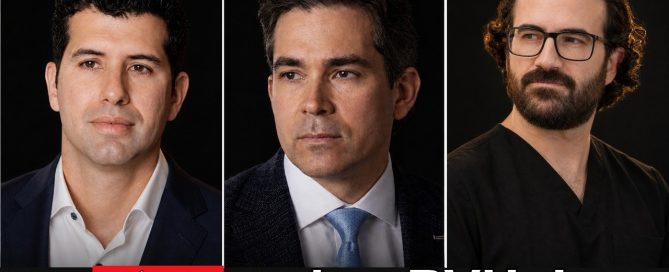
500,000 dialysis patients in the US. 70 to 80 percent of them need a fistula intervention every year. And the people doing their needle access? Non-clinical techs with a 35 percent annual turnover rate, punching the same spot over and over because nobody trained them on anything better. Aaron Moore saw this up close. Navy veteran, vascular surgeon, private practice in Jacksonville. He kept fixing the same complications caused by the same bad access patterns and decided to stop just treating the problem. Varustra is the company he helped build. An iPad app that maps fistula access points with photos and color-coded heat maps so techs can actually see where they've been and make better decisions. FDA breakthrough device designation. This conversation covers the broken dialysis access model, what it looks like when a practicing surgeon steps into medtech, and why Aaron believes if you don't understand your business, someone else will run it for you. Watch the full episode through the link in our bio. #LifeOfFlow #VascularSurgery #MedTech #PhysicianEntrepreneur #DialysisAccess
2026-08-12T14:45:28+00:00August 12, 2026|Shorts|

Stop Using RVUs | LOF # 130

WARNING: RVUs may measure a physician's activity, but they can keep doctors from seeing the real money their work creates. Hospitals know the value of every procedure. Most physicians never see the numbers. Dr. Eric Smuclovisky is an interventional radiologist, former academic physician and independent physician-entrepreneur. After opening an OBL/ASC, he watched reimbursement cuts and negative media pressure threaten the model. He then found another route to autonomy: negotiating professional service agreements that allow physicians to work with hospitals without surrendering their independence as W-2 employees. In this conversation, Dr. Eric Smuclovisky reveals: ⬛ Why physician fees collapsed while hospital facility fees expanded—and how that changed who controls American medicine ⬛ Why hospitals once competed for physicians with gourmet meals, private lounges, and white-tablecloth service ⬛ How Stark Law separated doctors from hospital ownership while leaving ownership open to nonphysicians ⬛ Why he believes the OBL model may be reaching the end of its 10-to-15-year cycle ⬛ How a professional service agreement can preserve physician autonomy while giving a hospital a complete service line ⬛ Why he calls RVUs “monopoly money,” and how doctors can begin discovering what is actually billed under their names ⬛ How the No Surprises Act, charge lists, payer contracts, and IDR expose the hidden economics behind a medical bill ⬛ Why the physician shortage may finally give doctors enough leverage to negotiate from strength Eric explains why a hospital's charge list is its “dirty little black book.” Hospitals set prices then negotiate discounts with commercial payers; those deals are not simple multiples of Medicare. A summary of benefits might show an $80,000 charge, roughly $20,000 paid, and $1,000 owed by the patient. The gaps reveal the private contracts behind the bill. It matters. Timestamps: 0:00 Cold open: the $1,000 hospital bill and why physicians cannot own hospitals 0:50 Welcome and introducing Dr. Eric Smuclovisky 3:19 Why medicine's history explains its current business model 4:11 Opening an OBL/ASC—and facing an immediate downturn 7:00 How independent physicians once built practices through call, consults, and referrals 9:08 Physician fees versus facility fees: the economics behind a practice 15:16 Why hospitals once courted doctors with gourmet physician lounges 16:52 University Medical Center, hibachi lunches, and the Cooley-DeBakey era 19:11 Stark Law, RVUs, and the separation of physicians from hospital ownership 22:13 Why the physician shortage could become a pivotal moment 22:27 Medical-school applications, international graduates, and the AI question 29:40 “I hope none of my children become physicians”—and what drove Eric to say it 34:16 How professional service agreements work 40:37 Dialysis access, bundling, and the OBL reimbursement cycle 43:50 Pitching an amputation-prevention service line to a hospital 46:18 Using the No Surprises Act to request billing associated with your name 46:42 CMS fee schedules versus commercial payer economics 48:16 The hospital charge list: the “dirty little black book” 54:01 The $80,000 bill that left the patient responsible for $1,000 56:35 Why hospital-payer agreements are negotiated discounts from charge lists 57:56 Out-of-network billing, independent dispute resolution, and hospital leverage 1:00:51 The structure of a hospital service-line agreement 1:01:32 Why three-to-five-year contracts can create stability 1:05:03 Copays, collections, and where the legal boundaries begin 1:06:42 Closing thoughts: physician courage and “Viva la revolución” Follow Dr. Eric Smuclovisky: LinkedIn: https://www.linkedin.com/in/eric-smuclovisky-58206927b/ Resources mentioned in this episode: 🏢 Outpatient Endovascular and Interventional Society (OEIS): https://oeisweb.com/ 🔗 Stark Law, CMS: https://www.cms.gov/medicare/regulations-guidance/physician-self-referral 🔗 No Surprises Act and independent dispute resolution, CMS: https://www.cms.gov/nosurprises 🔗 CMS Physician Fee Schedule and CPT reimbursement lookups 👤 Ross Perot, referenced during the discussion of RVU history Life of Flow is hosted by Dr. Lucas Ferrer and Dr. Miguel Montero-Baker. 🌐 Website: https://lifeofflowpodcast.com ▶ YouTube: https://www.youtube.com/@LifeofFlowPodcast 🎧 Listen: Spotify https://open.spotify.com/show/5GMv47SJ0ePxbjtIb1GZ5U · Apple https://podcasts.apple.com/us/podcast/life-of-flow/id1705596604 📩 Partner with the show: info@lifeofflowpodcast.com Connect with the hosts: Dr. Lucas Ferrer — [Lucas LinkedIn] Dr. Miguel Montero-Baker — https://www.linkedin.com/in/miguel-montero-baker-a44354214/ Follow Life of Flow: Instagram: https://www.instagram.com/lifeofflowpodcast/ X: https://x.com/vascularpodcast LinkedIn: https://www.linkedin.com/company/lifeofflow

2026-08-05T11:00:38+00:00August 5, 2026|Videos|

Stop using RVUs

Most physicians have no idea how much revenue they generate. Not a rough sense. No idea. I didn't for years. I knew my salary. I knew my RVUs. I never connected those numbers to what the system was actually collecting because of my work. When you finally do the math, it's not a pleasant surprise. It's a gut check. The gap between what you bring in and what you take home is not small, and nobody on the administrative side is going to walk you into that conversation voluntarily. That's by design. We are trained to keep our heads down and trust that someone else is handling the business side fairly. And for a long time, I did exactly that. Signed contracts without understanding the real value of what I was trading. RVUs are supposed to be the objective measure. But most of us learn what an RVU is worth to the system only after we've already locked in a number that undervalues it. The negotiation happens once. The consequences compound for years. Miguel and I got into all of this on the latest Life of Flow episode. How to actually calculate what you generate, why most contracts are structured to keep you from asking, and what changes when you finally have the numbers in front of you. This is the conversation I wish someone had with me before I signed my first contract.

2026-08-05T17:31:29+00:00August 5, 2026|Shorts|

Finding a Path: Foot Recanalization in Low-MAC Disease

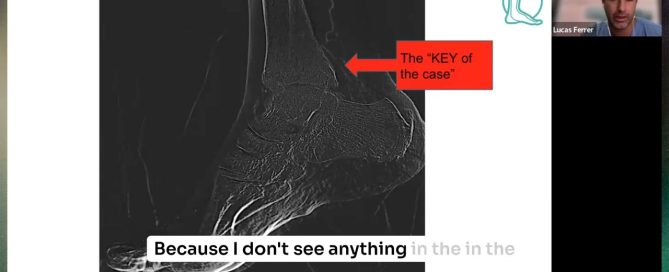
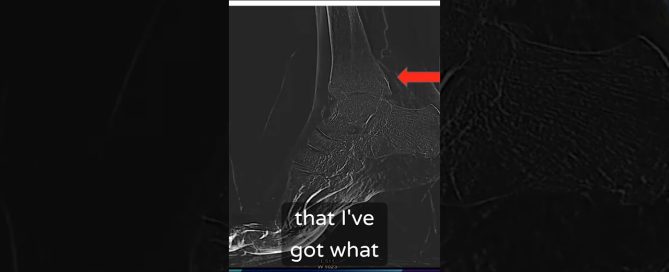
The MAC score told Mariano everything he needed to know before he touched the wire. 72-year-old, diabetic, Rutherford 6, right foot with gangrene of the first and fifth toes and plantar involvement. Three surgeons had already opened the foot surgically, found nothing usable, and referred for BKA. Mariano's team ran a CO2 angiogram, found the plantar circulation was fed by a peroneal posterior branch (anatomical variation nobody had imaged), and then he did something that looks reckless if you don't understand the logic behind it. He went subintimal. Aggressively. Recanalized the peroneal in about two minutes with an 0.35 NaviCross and a half-stiff J-tip Terumo wire. Pushed the catheter with the wire rather than just advancing the wire alone. Controlled the loop, used the tip, not the stiff part. Same wire, same technique to navigate the lateral plantar once he entered the foot through the posterior branch. Why was he comfortable being that aggressive? Because the MAC score was low. His line: "No calcium is in high percentage a big synonym of subintimal and fast cross." That one sentence reframes the entire decision tree. Low MAC means subintimal dissection is forgiving. You can move fast, you can loop, you can push. High MAC changes everything. You'd need to stay intraluminal because subintimal dissection in heavily calcified tibials is brutal, and in calcified foot arteries it's close to impossible. So the calcification score isn't just a descriptor on the chart. It's the variable that determines whether you're doing a two-minute recanalization or a completely different procedure. And then the part that stuck with me. As Mariano navigated deeper into the foot, he started finding vasculature nobody expected. A hibernated lateral plantar. The arch communicating to dorsal circulation. Fourth and fifth metatarsal arteries lighting up. Miguel made the point that no pre-operative image would have shown any of this. You don't get a blueprint before you go in. You get breadcrumbs. Each step of the procedure reveals the next clue, and you follow it. That's the part I think most trainees don't hear enough. The plan isn't supposed to be perfect before you start. The plan builds itself as you move, if you know what to look for and you have the technical vocabulary to follow where it leads. Mariano found the distal distribution system, saw the arch connect, and said: "Now I have a lot of hope because I have a distal distribution system, so I know I can make it function." Three months later the patient healed. Walking. Limb saved with a transmetatarsal amputation. The MAC score gave him permission to be aggressive. The technique gave him access. And the willingness to follow breadcrumbs instead of demanding a perfect map gave the patient a foot.

2026-07-31T05:00:37+00:00July 31, 2026|Videos|

There Are Levels To Every Game

Most vascular labs only reach for CO2 angiography when the creatinine is already ugly. Mariano Palena has been using it as his default for over 15 years. Not as a backup. Not as a last resort for the patient with a GFR of 18. As standard of care, even in patients with normal kidneys. That reframing changed how I think about contrast use in diabetic CLTI. Here's what we typically do: we reach for iodinated contrast because it's familiar, the images are beautiful, and CO2 feels like a compromise. Meanwhile we're burning through expensive contrast (Visipaque for diabetics isn't cheap) and stacking nephrotoxic risk on patients who already have kidneys hanging by a thread. Mariano's approach cuts iodine use by at least 50%. And with proper technique, bending the foot to eliminate movement artifact, using nerve blocks so the patient isn't flinching, the CO2 images are genuinely diagnostic. In the case we reviewed together, the CO2 angiogram is what revealed a plantar circulation fed by a peroneal posterior branch that three surgeons had missed on open surgical exploration. That anatomical finding is what saved the leg. The economics are hard to ignore too. CO2 is significantly cheaper per case than premium iodinated contrast. Multiply that across every diabetic CLTI patient in a busy cath lab and the numbers add up fast. Miguel said something honest during our conversation: he only reaches for CO2 when a patient has bad CKD. And I think that's where most of us are. We treat it like a workaround instead of a first-line tool. The question I keep sitting with is simple. If CO2 reduces nephrotoxicity, costs less, and in the right hands produces images good enough to catch what open exploration missed, why is it still the backup plan?

2026-07-30T05:00:25+00:00July 30, 2026|Videos|

Finding Hope in Uncertainty

"Last time you went through the ankle, it took 20 minutes, and you sent me home. And now you're telling me we can do that again or you can cut my leg off?" I've had patients look at me like I'm out of my mind when I present both options. And honestly, I get it. From the patient's perspective, the gap between what endovascular limb salvage actually feels like and what a major amputation means is so wide that offering both in the same sentence sounds absurd. This is something Miguel and I talked about on our Case Cast with Dr. Mariano Palena. We had a 72-year-old, Rutherford 6, gangrene on the first and fifth toes with plantar involvement, referred for a BKA after open surgical exploration found nothing usable. Mariano's team did a CO2 angiogram, recanalized the peroneal, entered the foot through the posterior branch into the lateral plantar and across the arch, and restored full perfusion. Five devices, roughly 20 minutes, outpatient-level procedure. The patient healed in three months and went back to work. A leg that was scheduled for amputation was saved with what amounted to a same-day intervention. Now imagine you're that patient. You've already been through something similar on your other foot. You healed. You walked out. And now a different doctor is telling you the only option is to lose the leg. That's what barbaric looks like from the other side of the table. Not because the surgeon offering amputation is wrong in every case, but because when a 20-minute procedure exists and nobody even attempts it before making that call, something in the system has failed. Patients already understand this. They live it. The question is whether the rest of us are willing to catch up. https://youtu.be/pRngJ0Pi_zE

2026-07-29T14:12:18+00:00July 29, 2026|Shorts|

THE LIMB THEY GAVE UP ON

A 72-year-old man was sent for a major amputation. One angiogram exposed the anatomy everyone else had missed—and a path to save his limb. Dr. Mariano Palena is an interventional radiologist and vascular specialist focused on complex endovascular limb salvage and chronic limb-threatening ischemia. In this Case Cast, he joins Dr. Lucas Ferrer and Dr. Miguel Montero-Baker to reconstruct a rescue that began after failed surgical revascularization and ended with a healed foot. The patient had diabetes, ischemic heart disease, bilateral CLTI, a previous left transmetatarsal amputation, and extensive gangrene of the right forefoot. A prior team explored possible bypass targets and concluded that nothing more could be done. Mariano’s team challenged that conclusion with a rule every limb-salvage program should confront: no major amputation without angiography. In this conversation, Dr. Mariano Palena reveals: ⬛ Why a foot that looks like a vascular “desert” may still contain hibernating vessels—and the clues that reveal them. ⬛ How an anatomical variation in the plantar circulation can make a reasonable bypass strategy fail before the true target is recognized. ⬛ Why telling patients that bypass is “one and done” creates the wrong expectations for a chronic disease that may require repeat maintenance. ⬛ What changes when clinicians describe limb salvage as remission rather than cure—and why another intervention may still be a successful outcome. ⬛ How Mariano follows angiographic “breadcrumbs,” crosses long chronic total occlusions, re-enters plantar vessels, and rebuilds flow through the foot. ⬛ Why the team debated opening one tibial pathway versus two—and whether extra flow justified more time, contrast, radiation, and devices. ⬛ What happened after the final angiographic “wow” moment: reconstruction, complete healing at three months, and a return to work. This is not a promise that every threatened limb can be saved. It is a close look at the reasoning, imaging, technical persistence, and honest patient counseling required before an irreversible decision is safely made. Timestamps: 00:00 — The Life of Flow Case Cast returns 01:20 — A limb referred for major amputation 03:12 — Gangrene, failed bypass exploration, and WIfI 05:31 — Limb salvage as remission, not cure 07:24 — Why bypass is not “one and done” 09:36 — Mariano on repeat interventions and expectations 12:04 — “No amputation without angiography” 16:11 — CO₂ angiography and severe below-knee disease 20:19 — The “desert foot” appears 21:44 — The anatomical variation that changed the case 26:29 — Following the angiographic breadcrumbs 30:07 — Crossing strategy for a long CTO 35:53 — Recanalizing the peroneal pathway 38:41 — Re-entry into the lateral plantar artery and arch 43:58 — One-vessel versus two-vessel revascularization 50:36 — The final angiographic “wow” moment 53:59 — Why a limb-salvage second opinion matters 54:56 — Fully healed at three months 56:18 — Closing perspective Follow Dr. Mariano Palena: LinkedIn: https://it.linkedin.com/in/mariano-palena-35b62259 Website: https://marianopalena.com/ Resources mentioned in this episode: • WIfI classification and the Global Vascular Guidelines • BEST-CLI trial • CO₂ angiography • Navicross and Bernstein catheters • Terumo and Asahi guidewires Life of Flow is hosted by Dr. Lucas Ferrer & Dr. Miguel Montero-Baker. 🌐 Website: https://lifeofflowpodcast.com ▶ YouTube: https://www.youtube.com/@LifeofFlowPodcast 🎧 Listen: Spotify https://open.spotify.com/show/5GMv47SJ0ePxbjtIb1GZ5U · Apple https://podcasts.apple.com/us/podcast/life-of-flow/id1705596604 📩 Partner with the show: info@lifeofflowpodcast.com Connect with the hosts: Dr. Lucas Ferrer — [Lucas LinkedIn] Dr. Miguel Montero-Baker — https://www.linkedin.com/in/miguel-montero-baker-a44354214/ Follow the show: Instagram https://www.instagram.com/lifeofflowpodcast/ · X https://x.com/vascularpodcast · LinkedIn https://www.linkedin.com/company/lifeofflow

2026-07-29T05:00:02+00:00July 29, 2026|Videos|

Why Doctors Aren’t Owning Facilities

Why aren't more doctors owning their facilities? It's time for a change! Doctors should be in control of patient care, not just following protocols. Why rush to procedures like stents when personalized care is possible? Let's talk about the importance of quality over quantity in healthcare. What do you think about this shift in the medical field? #Healthcare #PatientCare #MedicalProfessionals #LOF

2026-07-24T18:49:35+00:00July 23, 2026|Shorts|

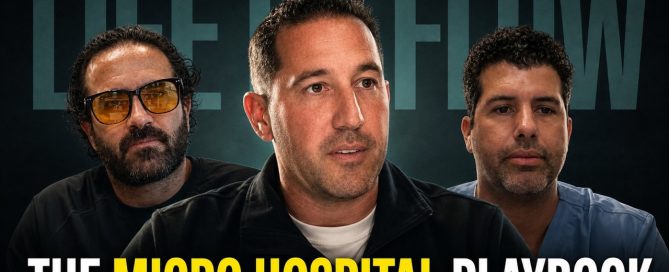
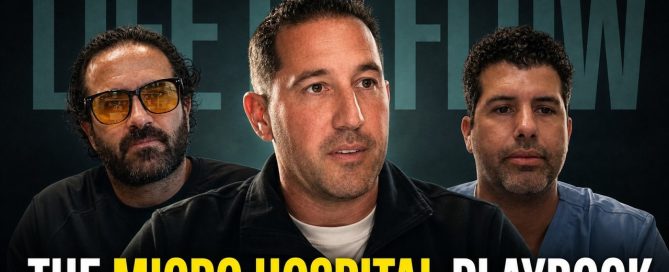
The MicroHospital Playbook wth Dr Adriano Goffi | LOF #128

The Microhospital Playbook with Dr. Adriano Goffi A physician can own 100 freestanding ERs—but direct ownership of one microhospital creates a completely different legal and financial reality. Dr. Adriano Goffi breaks down the economics, operating model, and ownership structures behind a more physician-led alternative. Dr. Adriano Goffi, MD, MPH, is a board-certified family medicine physician and Director and ER Physician at East Houston Medical Center. His career spans military medicine, hospital medicine, locums, emergency care, and microhospital operations. A former U.S. Navy hospital corpsman and surgical technologist, he brings an operator’s view of how clinical care, reimbursement, staffing, autonomy, and ownership collide. In this episode How eight ER patients per day could produce $750,000–$1.1 million in annual owner profit in the model Adriano encountered Why a microhospital can deliver several visits’ worth of care under one roof Why physicians can own ERs but face restrictions on directly owning hospitals How inpatient beds, operating rooms, imaging, and specialty clinics change the economics Why modular construction could reduce a hospital build to roughly six months How clinician equity can align surgeons, anesthesiologists, ER physicians, and hospitalists Chapters 00:00 — Can physicians take back the hospital? 01:16 — Meet Dr. Adriano Goffi 05:14 — Why locums gave Adriano control of his time 08:59 — Learning medicine through DRGs and decision-making 14:13 — The economics of eight ER patients per day 15:00 — Turning a freestanding ER into a microhospital 21:19 — The 24-hour-shift tradeoff 22:39 — Why doctors can own ERs but not hospitals 24:08 — Delivering multiple visits’ worth of care under one roof 28:13 — What a microhospital actually is 33:34 — Staffing and equipping a standalone ER 36:52 — Inpatient beds and Medicare participation 39:11 — Capital raises, land, debt, and opening day 40:26 — EBITDA multiples and attached clinics 42:20 — Is the freestanding ER boom ending? 45:36 — The screening question that generated 50 colonoscopies 47:07 — Building a physician-led microhospital in Houston 47:34 — Land ownership, trusts, and specialized counsel 49:46 — Site selection and the Walmart heuristic 51:50 — What a $20 million build could include 53:14 — Why growth is shifting to microhospitals 53:54 — Building a hospital in six months 55:32 — Why 10–20 beds is the sweet spot 57:16 — Sell to a system or keep physician ownership? 59:44 — Reserving equity for working clinicians 61:21 — Could vascular care live inside a microhospital? 63:54 — Closing thoughts Follow Dr. Adriano Goffi LinkedIn: https://www.linkedin.com/in/adriano-goffi-md-mph-81b399a2/ East Houston Medical Center: https://ehmct.com/ Life of Flow Hosted by Dr. Lucas Ferrer and Dr. Miguel Montero-Baker. Website: https://lifeofflowpodcast.com/ YouTube: https://www.youtube.com/@LifeofFlowPodcast/ Spotify: https://open.spotify.com/show/5GMv47SJ0ePxbjtIb1GZ5U Apple Podcasts: https://podcasts.apple.com/us/podcast/life-of-flow/id1705596604 Instagram: https://www.instagram.com/lifeofflowpodcast/ Partner with the show: info@lifeofflowpodcast.com #Microhospital #PhysicianEntrepreneurship #EmergencyMedicine #HealthcareBusiness #LifeOfFlowPodcast This episode is for educational and informational purposes only and does not constitute medical, legal, tax, investment, or financial advice. Consult qualified professionals before acting on any strategy discussed.

2026-07-23T03:56:40+00:00July 23, 2026|Videos|

The Microhospital Playbook with Dr. Adriano Goffi | LOF #128

*The Microhospital Playbook with Dr. Adriano Goffi* A physician can own 100 freestanding ERs—but direct ownership of one microhospital creates a completely different legal and financial reality. Dr. Adriano Goffi breaks down the economics, operating model, and ownership structures behind a more physician-led alternative. Dr. Adriano Goffi, MD, MPH, is a board-certified family medicine physician and Director and ER Physician at East Houston Medical Center. His career spans military medicine, hospital medicine, locums, emergency care, and microhospital operations. He brings an operator’s view of how clinical care, reimbursement, staffing, autonomy, and ownership collide. *In this episode* * How eight ER patients per day could produce $750,000–$1.1 million in annual owner profit in the model Adriano encountered * Why a microhospital can deliver several visits’ worth of care under one roof * Why physicians can own ERs but face restrictions on directly owning hospitals * How inpatient beds, operating rooms, imaging, and specialty clinics change the economics * Why modular construction could reduce a hospital build to roughly six months * How clinician equity can align surgeons, anesthesiologists, ER physicians, and hospitalists *CHAPTERS* 05:14 — Why locums gave Adriano control of his time 14:13 — The economics of eight ER patients per day 15:00 — Turning a freestanding ER into a microhospital 22:39 — Why doctors can own ERs but not hospitals 33:34 — Staffing and equipping a standalone ER 39:11 — Capital raises, land, debt, and opening day 40:26 — EBITDA multiples and attached clinics 47:34 — Land ownership, trusts, and specialized counsel 53:14 — Why growth is shifting to microhospitals 57:16 — Sell to a system or keep physician ownership? 59:44 — Reserving equity for working clinicians 61:21 — Could vascular care live inside a microhospital? *FOLLOW DR. ADRIANO GOFFI* LinkedIn: https://www.linkedin.com/in/adriano-goffi-md-mph-81b399a2/ East Houston Medical Center: https://ehmct.com/ *Life of Flow* Hosted by Dr. Lucas Ferrer and Dr. Miguel Montero-Baker. Website: https://lifeofflowpodcast.com/ YouTube: https://www.youtube.com/@LifeofFlowPodcast/ Spotify: https://open.spotify.com/show/5GMv47SJ0ePxbjtIb1GZ5U Apple Podcasts: https://podcasts.apple.com/us/podcast/life-of-flow/id1705596604 Instagram: https://www.instagram.com/lifeofflowpodcast/ Partner with the show: mailto:info@lifeofflowpodcast.com #Microhospital #PhysicianEntrepreneurship #EmergencyMedicine #HealthcareBusiness #LifeOfFlowPodcast This episode is for educational and informational purposes only and does not constitute medical, legal, tax, investment, or financial advice. Consult qualified professionals before acting on any strategy discussed.

2026-07-22T14:18:37+00:00July 22, 2026|Videos|
Go to Top