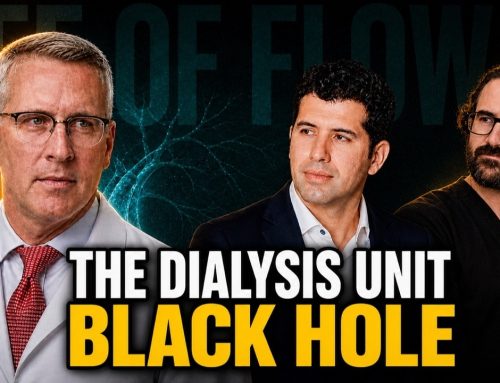
A child should not need another open operation because an implanted blood vessel cannot grow—and a vascular graft should not become a surface where clot and infection win.
Dr. Arush Kalra is a physician, biomedical engineer, co-founder and chief scientific officer of PECA Labs. He left pediatric-urology training after an attending told him, “Don’t play the game; make the game.” At Carnegie Mellon, he turned toward biomedical engineering and a strict rule: better technology should preserve a surgeon’s familiar craft instead of forcing the surgeon to relearn it.
The origin was personal. Kalra’s mother has Marfan syndrome and a bicuspid aortic valve. Her progressive aortic disease pushed him toward cardiovascular materials. PECA began with expandable ePTFE conduits intended to accommodate growth in children, then asked an adult-vascular question: can a familiar graft be redesigned to resist thrombosis, reduce hyperplasia, retain antibiotics and still feel intuitive?
Kalra describes the graft as a sandwich: the surfaces govern how the body responds, while the center supplies strength, flexibility and compliance. His team changes the microstructure of a material surgeons already know and inspects every graft with scanning electron microscopy. He discusses encouraging preclinical comparisons, but these remain investigational results—not clinical promises.
In this conversation, Dr. Arush Kalra reveals:
⬛ Why he walked away from the identity his family and training had built for him
⬛ How his mother’s cardiovascular disease redirected his career toward devices that can grow
⬛ Why the best invention may preserve a surgeon’s technique while changing the material underneath it
⬛ How microstructure, elasticity and compliance influence thrombosis and anastomotic hyperplasia
⬛ Why PECA is exploring antibiotic retention rather than a drug layer that disappears quickly
⬛ Why patient safety demands imagining the worst outcome, not merely the most likely one
Timestamps:
05:24 Growing up above a neonatal hospital
06:46 His mother’s Marfan syndrome and aortic disease
07:43 “Don’t play the game—make the game”
11:54 Searching for a cardiovascular solution
12:22 The design rule: do not make surgeons relearn their craft
14:07 A graft designed to grow with a child
16:28 The origin of PECA Labs
17:28 The obsession with clot formation
19:41 Engineering the layers of ePTFE
23:21 Why Arush praises the FDA process
28:19 Scanning every graft with electron microscopy
45:22 Why mistakes are the fastest education
46:58 Starting with peripheral vascular disease
48:23 Patient safety before commercial focus
52:37 Anti-thrombogenic and antibiotic development paths
53:24 Designing for repeated large-needle puncture
55:21 The antibiotic strategy discussed with regulators
56:59 The inventor as artist, scientist and surgeon
Follow Dr. Arush Kalra:
LinkedIn: https://www.linkedin.com/in/arush-kalra-b4aa4750/
PECA Labs: https://www.pecalabs.com/
Resources mentioned in this episode:
🏢 PECA Labs — expandable, radiopaque, anti-thrombogenic and valved polymer platforms
🧪 ePTFE, scanning electron microscopy and microstructured vascular graft design
🏛 FDA 510(k) and De Novo pathways as discussed in the recording
Life of Flow is hosted by Dr. Lucas Ferrer & Dr. Miguel Montero-Baker.
🌐 Website: https://lifeofflowpodcast.com
▶ YouTube: https://www.youtube.com/@LifeofFlowPodcast
🎧 Listen: Spotify https://open.spotify.com/show/5GMv47SJ0ePxbjtIb1GZ5U · Apple https://podcasts.apple.com/us/podcast/life-of-flow/id1705596604
📩 Partner with the show: info@lifeofflowpodcast.com
Connect with the hosts:
Dr. Lucas Ferrer — [Lucas LinkedIn]
Dr. Miguel Montero-Baker — https://www.linkedin.com/in/miguel-montero-baker-a44354214/
Follow the show: Instagram https://www.instagram.com/lifeofflowpodcast/ · X https://x.com/vascularpodcast · LinkedIn https://www.linkedin.com/company/lifeofflow
Educational only; never medical advice. Confirm product and regulatory timelines with PECA Labs.
Related Posts